
Yogi Priyavrat Animesh and Indian Exhibition Services CEO Swadesh Kumar explore a future-facing framework connecting consciousness, global industry, sustainability, spiritual tourism and Ujjain 2028.
NEW DELHI | 30 AUGUST 2026
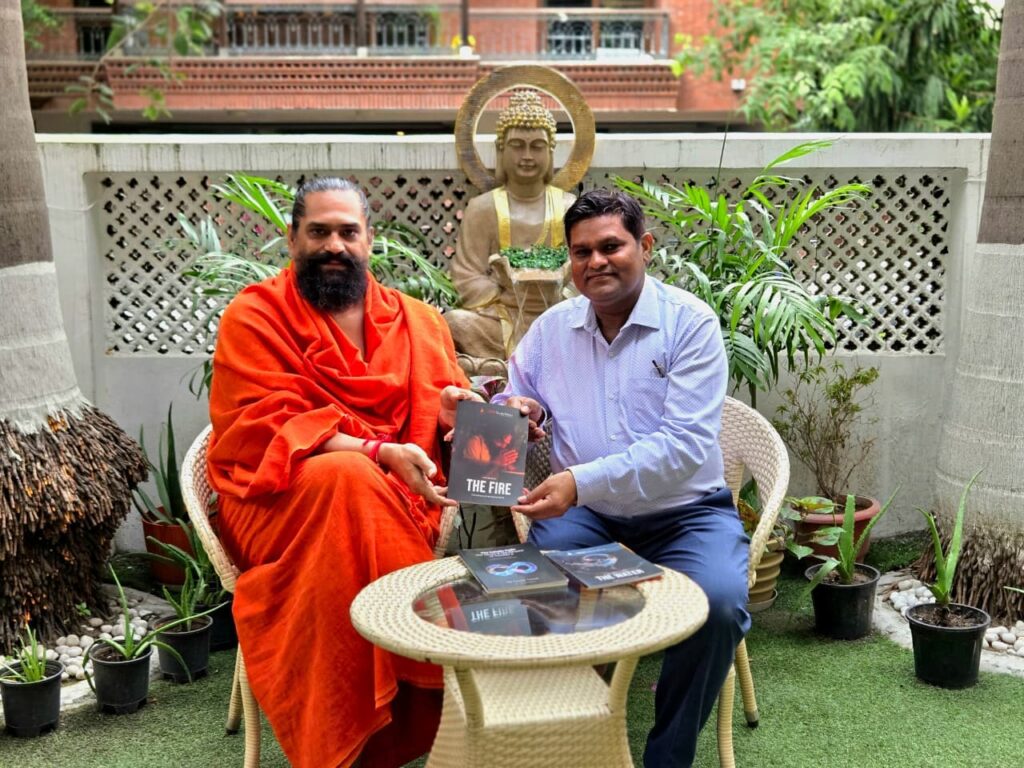
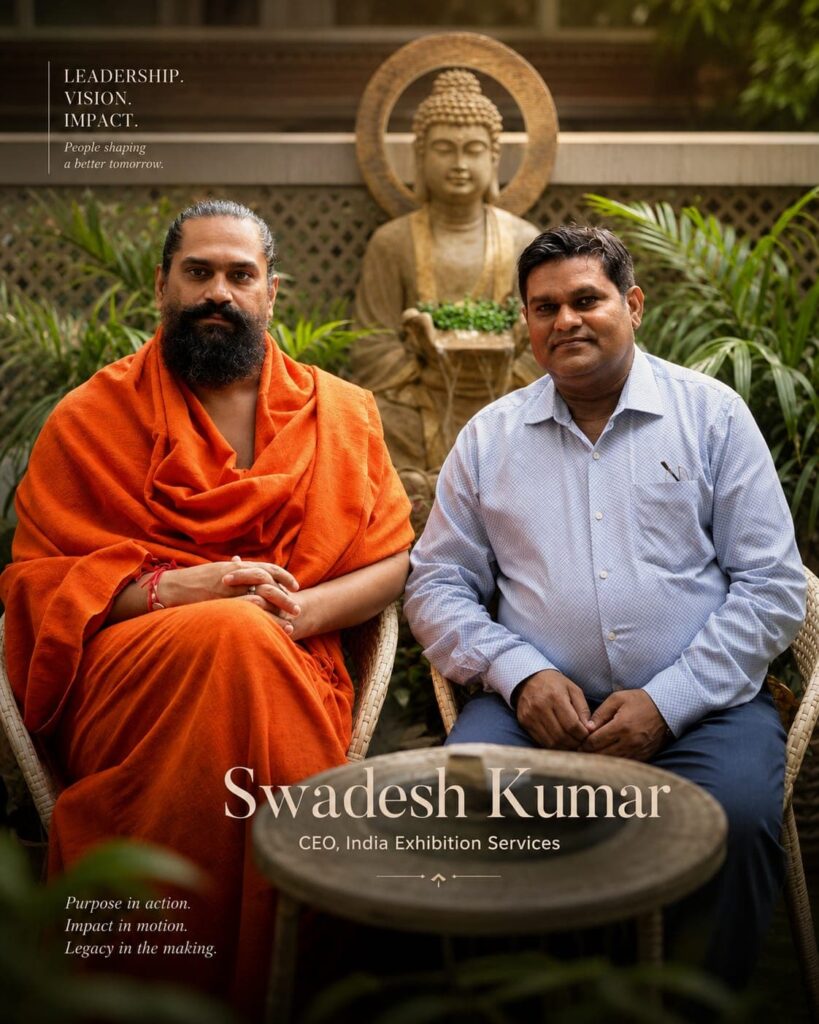
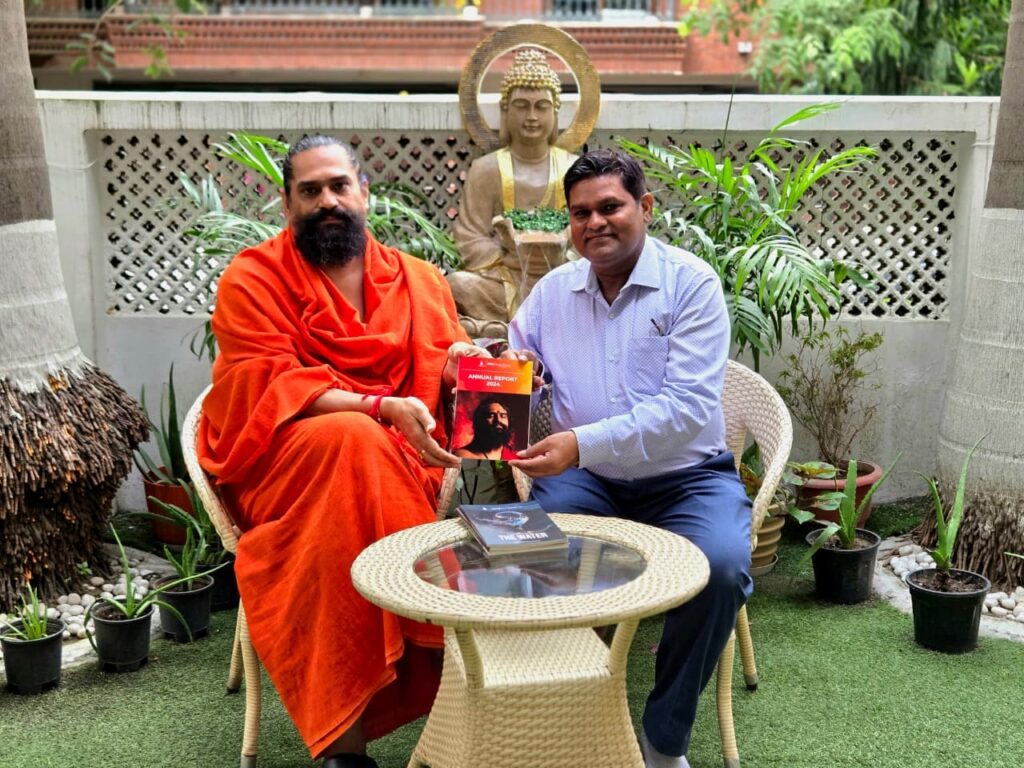
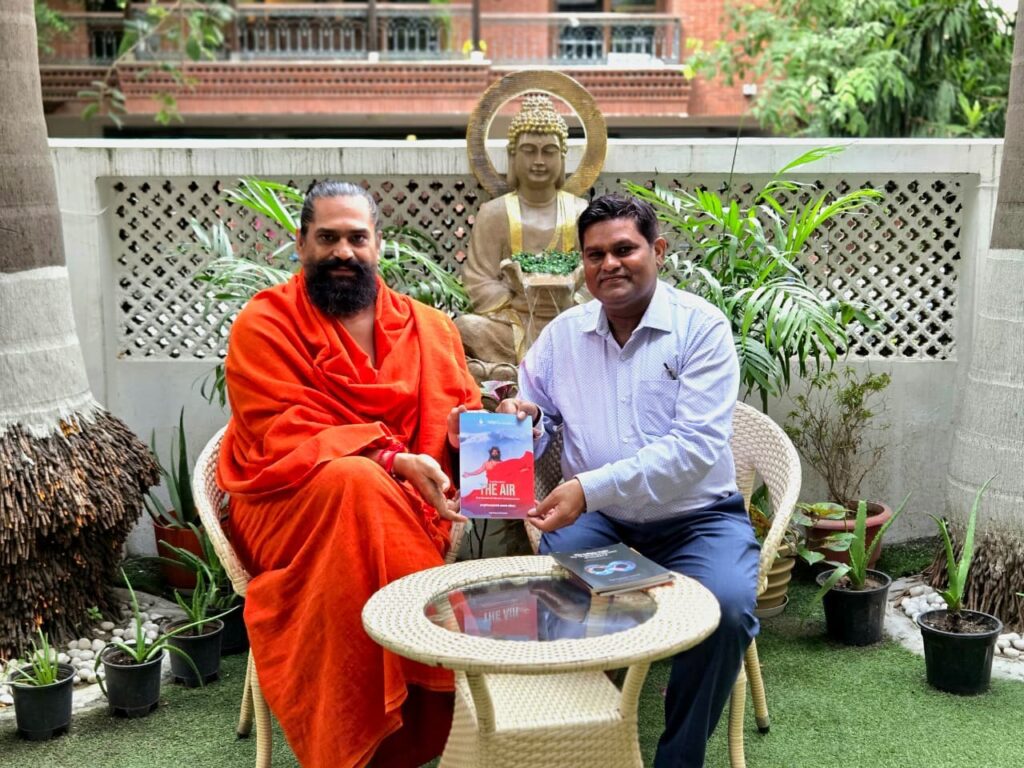
A significant strategic dialogue on the future intersection of consciousness, industry, sustainability and global collaboration took place at OOJ Ashram, Defence Colony, New Delhi, where Yogi Priyavrat Animesh met Swadesh Kumar, CEO of Indian Exhibition Services.
Rather than focusing on a conventional event or a single institutional collaboration, the conversation explored a larger question: Can India create a new global platform where consciousness, civilizational wisdom, enterprise, technology, sustainability and international leadership converge?
At the centre of the discussion was the emerging vision of the World Consciousness Mahakumbh, proposed in connection with Ujjain 2028.
The idea is to look beyond the traditional architecture of conferences and exhibitions and explore the possibility of creating a multidimensional global ecosystem bringing together spiritual leaders, scientists, policymakers, entrepreneurs, corporations, universities, researchers, innovators, cultural institutions and international delegations.
FROM A GATHERING TO A GLOBAL ECOSYSTEM
The strategic conversation examined how a platform such as the World Consciousness Mahakumbh could develop several interconnected dimensions, including a World Consciousness Forum, International Consciousness Expo, Global Leaders Dialogue, Spiritual Tourism Summit, Indian Knowledge Systems Pavilion, Conscious Technology and AI Forum, Sustainability Pavilion, University and Research Forum, Conscious Leadership Summit and international country and state showcases.
The underlying proposition is ambitious but increasingly relevant: the future of human development cannot be measured only through economic expansion, technological power or consumption.
A new global conversation may be required around the quality of human consciousness that carries that power.
This is where OOJ’s broader institutional vision seeks to place India—not merely as a participant in global conversations about the future, but as a civilizational contributor capable of introducing new frameworks for leadership, human development and collective responsibility.
THE CONSCIOUSNESS ECONOMY
One of the most forward-looking ideas emerging from the dialogue was the possibility of developing the concept of a “Consciousness Economy.”
The world already speaks about the digital economy, green economy, knowledge economy and creator economy.
The Consciousness Economy would ask a different question:
What would economic and technological development look like if human well-being, responsible leadership, ecological balance, ethical innovation and long-term civilizational responsibility were treated as central components of progress?
Such a framework could eventually connect sectors as diverse as wellness, healthcare, yoga, Ayurveda, education, sustainability, responsible technology, spiritual tourism, leadership development, cultural industries and research.
It could also create opportunities for new intellectual work, global indices, research reports, institutional partnerships and policy dialogues.
WORLD CONSCIOUSNESS EXPO — A NEW INTERNATIONAL PLATFORM
Given Swadesh Kumar’s experience in the exhibition and industry ecosystem, the meeting also explored the possibility of developing a major international exhibition architecture around the consciousness movement.
A future World Consciousness Expo could potentially bring together organisations working across:
Yoga and Meditation Ayurveda and Holistic Wellness Indian Knowledge Systems Spiritual and Consciousness Tourism Universities and Research AI and Human Consciousness Sustainable Living Green Technology Responsible Business Cultural Heritage Hospitality and Retreats Social Innovation Future of Human Well-being
The ambition would not be to create another conventional trade exhibition.
Instead, the platform could seek to demonstrate how consciousness-related ideas are beginning to influence business, leadership, technology, tourism, health, education and sustainability across the world.
UJJAIN 2028 — A MEETING POINT OF CIVILIZATIONS
A major part of the dialogue focused on the extraordinary international potential surrounding Ujjain 2028.
India’s Kumbh tradition already represents one of the world’s most remarkable examples of human congregation, faith, culture and civilizational continuity.
The proposed World Consciousness Mahakumbh seeks to explore whether this ancient civilizational setting can simultaneously become a contemporary global platform for dialogue on humanity’s future.
The vision is not to alter the spiritual character of the Kumbh, but to create an additional intellectual and institutional layer around it—one capable of connecting ancient wisdom with contemporary global challenges.
In such a framework, Ujjain could become a meeting ground for:
Saints and Scientists.
Spiritual Traditions and Universities.
Governments and Global Institutions.
Entrepreneurs and Ethical Innovators.
Ancient Knowledge and Artificial Intelligence.
Civilization and the Future.
SPIRITUAL TOURISM AS CULTURAL DIPLOMACY
The conversation also touched upon the emerging global importance of spiritual and consciousness tourism.
India possesses an extraordinary network of sacred geography—Kumbh cities, Jyotirlingas, Shakti Peethas, Buddhist circuits, yoga centres, ancient knowledge traditions, pilgrimage routes, sacred rivers and living spiritual institutions.
The future opportunity lies in connecting this heritage with international networks in Asia, the Middle East, Europe and beyond.
This could eventually support new spiritual and consciousness corridors linking India with countries possessing complementary cultural, Buddhist, Indic, wellness and contemplative traditions.
Such initiatives could turn spiritual tourism into a sophisticated instrument of cultural diplomacy, people-to-people connectivity and civilizational exchange.
GREEN AND CONSCIOUS MEGA-GATHERINGS
Another area explored was the possibility of developing a future framework for environmentally responsible mega-gatherings.
Waste management, water conservation, circular economy systems, renewable energy, sustainable mobility, biodegradable infrastructure, sacred ecology and responsible pilgrimage could become integral components of a Green & Conscious Kumbh framework.
The larger objective would be to demonstrate that spirituality and sustainability cannot remain separate conversations.
A civilisation that speaks about the sacredness of nature must also demonstrate that reverence through modern environmental systems.
CORPORATE INDIA AND THE CONSCIOUSNESS QUESTION
The meeting also examined an increasingly important question for business leadership:
Can organisations become more powerful without becoming less human?
This opens the possibility of future OOJ platforms bringing together CEOs, founders, investors, policymakers and thought leaders around subjects such as conscious leadership, ethics of power, responsible AI, purpose-driven enterprise, employee well-being, sustainability and the future of work.
A future OOJ Conscious Business Forum could become an interface between India’s spiritual-intellectual heritage and the rapidly changing realities of global enterprise.
FROM VISION TO INSTITUTION
For Yogi Priyavrat Animesh, the larger direction is institutional rather than event-centric.
The objective is to develop structures capable of continuing long after any individual conference or gathering has concluded.
This could eventually involve research platforms, international partnerships, academic collaborations, global dialogues, exhibitions, leadership programmes, policy studies and permanent institutions dedicated to the study of consciousness and civilization.
The meeting with Swadesh Kumar therefore represented an exploration of how vision and execution, consciousness and enterprise, philosophy and institutional architecture might work together.
The discussions were exploratory, and specific collaborations or institutional roles would be developed only through subsequent structured engagement.
Yet the direction of the conversation reflected a much larger ambition.
As the world confronts accelerating artificial intelligence, ecological stress, geopolitical uncertainty, mental-health pressures and profound transformations in the meaning of work and human identity, the question of consciousness is increasingly moving beyond the spiritual sphere.
It is becoming a question of leadership.
A question of technology.
A question of economics.
A question of civilization.
And perhaps, ultimately, a question of humanity’s ability to responsibly carry the power it has created.
The emerging vision from OOJ Ashram therefore begins with a simple but consequential proposition:
The next great global transformation may not come only from producing more power.
It may come from developing the consciousness required to use that power wisely.
OOJ ASHRAM Defence Colony, New Delhi 30 August 2026
Strategic Dialogue: Yogi Priyavrat Animesh × Swadesh Kumar
Towards World Consciousness Mahakumbh — Ujjain 2028